EARLY CHILDHOOD EDUCATION PROFESSIONAL DEVELOPMENT
  • About ECEPD
    • Zahra Rahbari
  • Together In Childcare
    • Childhood >
      • Teaching Philosophy
      • Different Childhoods-Kenya
      • Most Enjoyed
      • Literacy Learning
      • Observing Closely
      • ProD
  • Become ECE/Open Centre
  • BLOG
  • CONTACT
most_enjoyed.m4a
File Size: 191 kb
File Type: m4a
Download File

most_enjoyed.pdf
File Size: 42 kb
File Type: pdf
Download File

Reflect on your early learning experiences. 

- How do you define quality in early learning setting?
- How does your understanding of quality as an early childhood educator might affect children's enthusiasm for attending child care centre?
​

Submit your answer
(between 150-200 words) to the Blog to receive one hour ECE certificate for free.
 
element_settings.Image_30621876.default
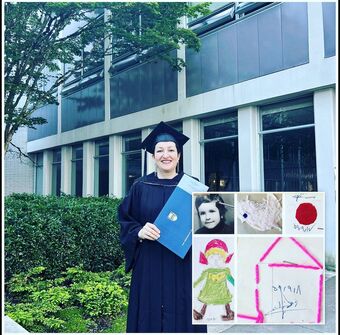
Background: Zahra Rahbari's Graduation Ceremony at UBC; Bottom Right: Flashback to Zahra's Kindergarten Memories

Rekindling the Joy of Learning: A Reflection for Educators, Parents, and Caregivers
​By Zahra Rahbari

By contributing your reflections to the blog, you help raise awareness about early learning and receive a one-hour professional development certificate toward the 40-hour requirement set by the ECE Registry.
​
At a recent high school graduation, one student shared that her favourite part of school was “the breaks.” This simple statement struck a chord. An immigrant youth now studying Criminology in college, her words raise an important question for all of us who care for and educate children: Why do so many young people lose their love for learning?

As Fuller et al. (2020) remind us, children enter the world curious, eager to explore, ask questions, and make sense of the unknown. They are natural learners. So what changes over time? Why does school, a place designed for growth, often become a space of disengagement?

The answer lies in what gets lost along the way: passion, intentionality, and engagement. Drawing inspiration from MacDonald’s (2018) work, we are reminded that learning flourishes when educators and caregivers show up with enthusiasm, connection, and a genuine interest in children’s experiences. When we meet children where they are, with openness to their ideas, cultures, and ways of being, we create space for joyful, meaningful learning (Purcell-Gates et al., 2014).

This approach also reflects the thinking of Talaee (2019), who sees children not as passive learners but as active participants in shaping culture and community. Yet, as MacDonald at al. (2013) caution, children are often treated as separate from their social worlds, isolated from the communities that shape them. The reality is, as Szente et al. (2007) explain, children’s learning is deeply influenced by layers of social and cultural context—family, school, community, and policy. In this system, adults play a powerful role.

What Does This Mean for CareGivers, Parents and Educators?
Whether you are a parent or early childhood educator you hold the potential to reignite children’s love of learning. By being intentional, curious, and culturally responsive, we can co-create environments where children feel seen, valued, and inspired to enjoy the learning environment—not just during breaks, but all the time.
BLOG
© 2023 by eceprofessionaldevelopment.com
  • About ECEPD
    • Zahra Rahbari
  • Together In Childcare
    • Childhood >
      • Teaching Philosophy
      • Different Childhoods-Kenya
      • Most Enjoyed
      • Literacy Learning
      • Observing Closely
      • ProD
  • Become ECE/Open Centre
  • BLOG
  • CONTACT